
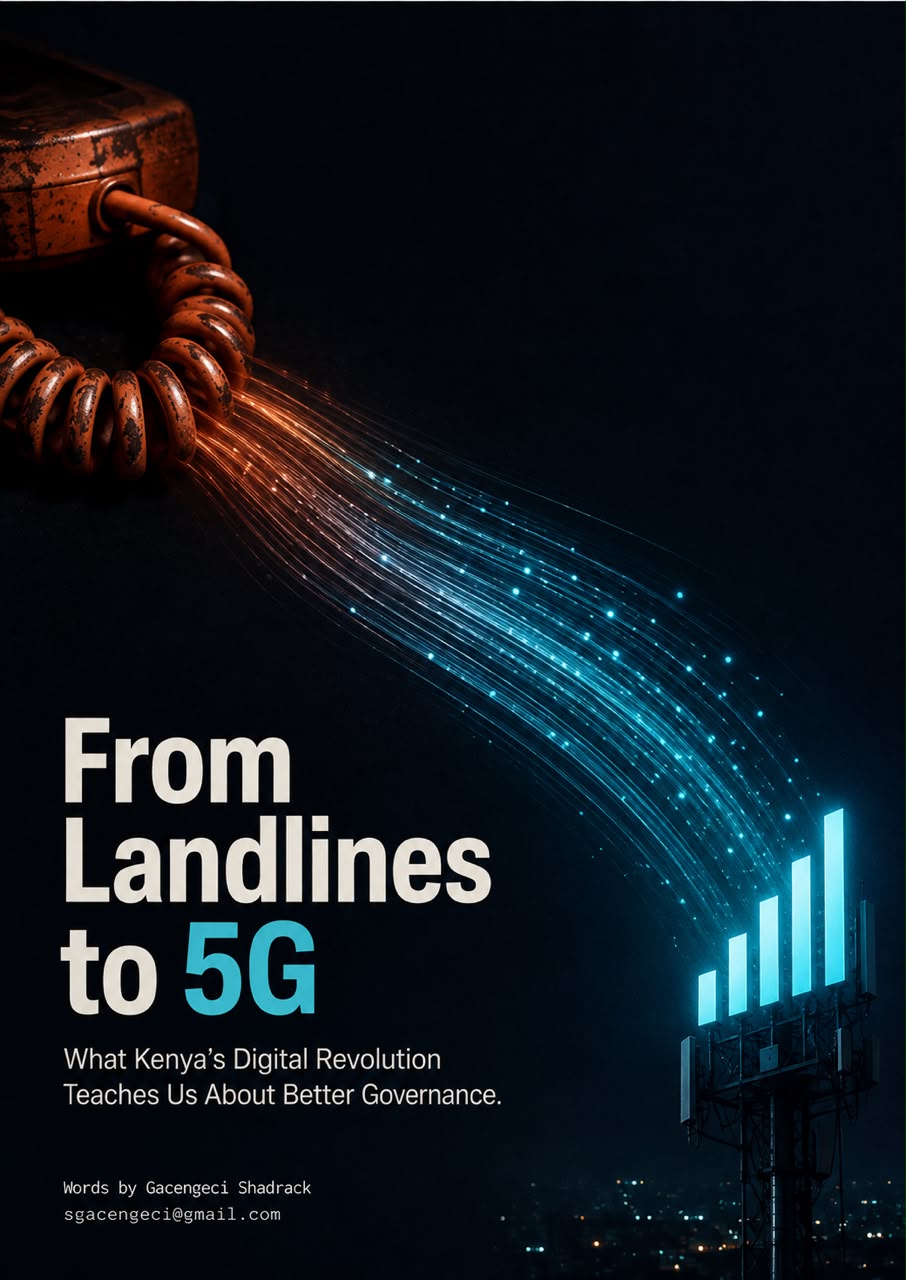
There was a time when owning a telephone in Kenya was a luxury. Many Kenyans still remember waiting years for a fixed landline connection from the Kenya Posts and Telecommunications Corporation (KPTC). Communication was slow, expensive, and largely inaccessible to ordinary citizens. A phone call often required planning, patience, and, in some cases, a trip to the nearest call booth.
Fast forward to today, and Kenya stands among the world's leading digital economies. We have moved from landlines to smartphones, from analogue exchanges to 5G networks, and from sending money through buses and postal orders to transferring funds instantly through our mobile phones.
The Telecommunications Revolution
The liberalization of Kenya's telecommunications sector changed far more than how we communicate. Competition encouraged innovation. Investments in infrastructure expanded network coverage. Mobile devices became more affordable. Internet access reached millions who had previously been disconnected from the digital world.
The introduction of mobile money was perhaps the defining moment in this journey. Before mobile money, sending money to family members involved significant inconvenience and risk. People entrusted cash to bus drivers, relied on postal money orders, or travelled long distances simply to make payments.
Today, a farmer can receive payment for produce instantly. A parent can pay school fees from hundreds of kilometres away. Small businesses can serve customers without handling cash. Entrepreneurs can build businesses using nothing more than a smartphone and a reliable network connection.
Kenya became a global reference point for financial inclusion because we chose innovation over tradition.
Technology Changed More Than Communication
Every major technological shift also transformed how institutions interact with citizens. Businesses became more responsive. Banks became more accessible. Education expanded beyond physical classrooms. Healthcare increasingly embraced digital records and remote consultations.
Citizens came to expect services that were faster, more transparent, and available whenever they needed them.
What Does This Mean for Local Governance?
County governments are closest to the people. Residents interact with county services almost every day—whether through roads, waste management, planning approvals, public health, licensing, markets, drainage, or environmental management.
Yet too many processes remain slow, opaque, and unnecessarily complicated.
Imagine a Karen Ward where residents can:
- Report damaged roads or broken streetlights through a simple digital platform
- Track the progress of county-funded projects in real time
- Participate in public consultations both physically and online
- Receive timely updates on development projects, road closures, and public meetings
- Access clear information about how public funds are allocated and spent
Technology already exists to make this possible. The question is whether we have the leadership to embrace it.
Governance Is Ultimately About Trust
One of the greatest lessons from Kenya's telecommunications success is that people adopt innovation when it solves real problems. Mobile money succeeded because it was simple, reliable, and trustworthy. The same principles should guide public leadership.
Citizens deserve leaders who communicate openly, provide accurate information, and remain accessible throughout their term—not only during election campaigns. Digital tools cannot replace leadership, but they can strengthen accountability by making information easier to access and public participation more meaningful.
Preparing Karen for the Future
Karen is home to professionals, entrepreneurs, educational institutions, businesses, diplomats, young innovators, and families who increasingly expect modern, efficient public services. As our communities become more connected through fibre broadband, smart devices, artificial intelligence, and 5G technology, local governance must evolve alongside them.
Our ward should not simply consume technology; it should use technology to improve service delivery, strengthen transparency, encourage citizen participation, and make better decisions based on reliable information.
This is not about replacing human interaction. It is about making government more responsive, more accountable, and more accessible.
Looking Ahead
Kenya's telecommunications journey teaches us an important lesson. Transformation begins when leaders are willing to challenge outdated systems and embrace better ways of serving people. From waiting years for a landline to accessing instant digital services, our country has shown what is possible when innovation is matched with vision.
As we look toward the future of Karen Ward, we should ask ourselves a simple question:
The future of governance is not merely digital. It is accountable, inclusive, responsive, and built around the needs of the people it serves.
Digital transformation starts with leadership.
Karen Ward deserves governance that is as modern and responsive as the services we use every day. Join us in building better leadership.
Get Involved